

- Is InboxAlly Worth It? Here’s a Look at the Cost vs. Value - September 2, 2026
- The Cheaper Way to Learn DTC: A Roadmap for Founders - August 21, 2026
- Domain Reputation Dropped? Here’s a Guide on How to Recover - May 22, 2026
Last Updated on September 8, 2026 by Victor Carrera
Starting at $149 a month, InboxAlly is not the cheapest tool out there. At that price, you want to make sure you’ll be getting your money’s worth.
There are email warm-up tools on the market for $20-$30, so what makes InboxAlly different, and how can you justify the cost?
After doing a deep dive into the tool and using it myself, I’ve determined that the better question is:
What problem are you trying to solve?
Look at your business goals and current campaign behavior.
If you’re doing low-volume sends to smaller lists, and there is no need or requirement for scale, then you won’t need a tool like InboxAlly. A simple email warm-up tool would be sufficient.
On the flip side, if you’re sending moderate to high volume sends to big databases, and you’re constantly dealing with issues such as spam placement, damaged domains, and deliverability, then InboxAlly would be extremely useful.
Prefer to watch? Check out the video below for a closer look at InboxAlly, its email deliverability features, and whether it’s worth the starting price.
What does InboxAlly cost?

There are four plans to consider when signing up.
- Starter: $149/month for one sender profile and up to 100 seed emails per day
- Plus: $645/month for up to five sender profiles and 500 seed emails per day
- Premium: $1,190/month for up to ten sender profiles and 1,000 seed emails per day
- Enterprise: Custom pricing and volume
As a benchmark for your business, InboxAlly recommends the Starter plan if you’re sending about 2000 emails per day or less.
There is also quite a steep jump between plans, so it’s important to assess your business’s campaign sending behaviour before deciding on which plan to choose.
What are you actually paying for?
I’ve had a look at a few different comparative reviews, and one thing I noticed is that the majority talk about these tools as general warm-up and deliverability tools. But some tools, like InboxAlly, offer much more, such as:
- Active seed engagement rather than basic sending activity

InboxAlly, like other email deliverability tools, uses email seed accounts. However, the tool provides more interaction than just receiving warm-up messages.
Emails sent to providers such as Gmail, Yahoo and Outlook generate actual engagement by:
- Opening
- Clicking links
- Scrolling
- Marking emails as ‘important’
- Replying
- Moving messages from spam to the inbox
By doing this, InboxAlly creates the positive engagement signals that mailbox providers like to see.
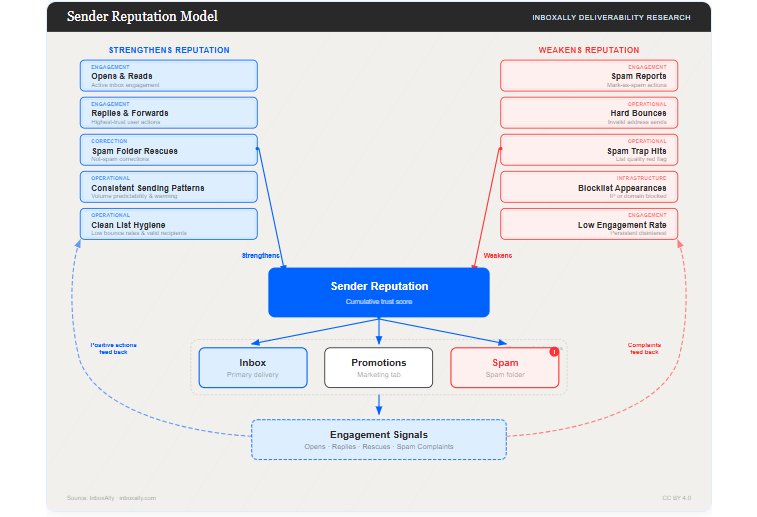
This is one of the most valuable InboxAlly features. The tool won’t be worth the money if you’re simply trying to warm up a new email account, but if your email channel revenue has dropped because messages are going to spam, then the tool will really prove its value.
You’d be spending more money diagnosing the problem and losing more revenue than you would be if you purchased one of the InboxAlly plans.
InboxAlly is specifically designed to work with senders whose reputation has already dropped. Its system can find seed emails routed into spam, move them back to the inbox, interact with them, and generate positive engagement signals over time.
But it can’t magically rescue every domain.
Make sure your account hygiene is in top order when it comes to authentication and database lists. If you keep sending high-volume emails to disengaged users, or your DKIM, DMARC, and SPF records are incorrect, then you need to address these issues first.
InboxAlly is a recovery tool that can help rebuild your reputation; it can’t fix underlying issues.
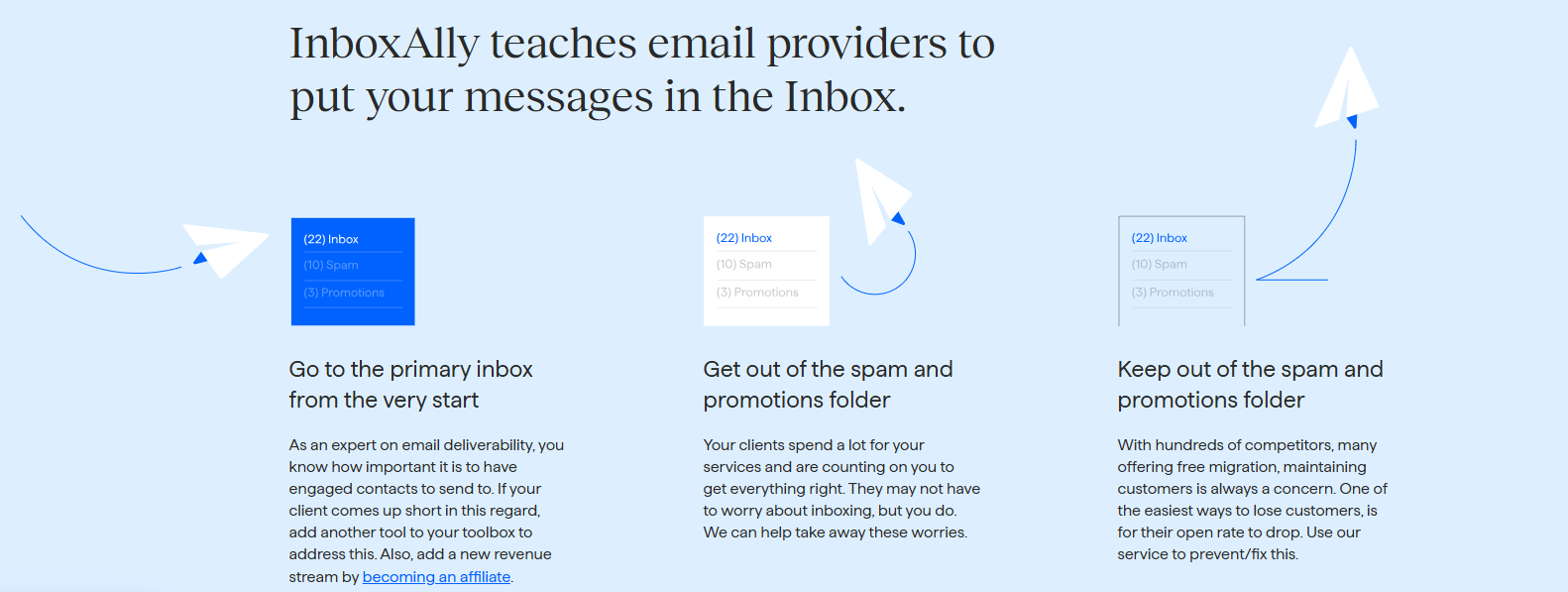
Mailbox providers now also filter emails based on the content. Even though your email service provider reports an email as ‘delivered’, it could be landing in ‘other’, ‘promotions’, ‘social ’, or ‘updates’ folders.
The truth is, you don’t actually know what happens once an email is delivered.
InboxAlly lets you send email content to its seed network across most providers and assesses the placement. It would be useful to know if a particular mailbox is routing your emails to spam before you send out a major promotional campaign.

What’s great about InboxAlly is its reputation monitoring capabilities that all plans feature:
- IA score
- IA domain rating
- Inbox placement testing
- Live blacklist monitoring
- DMARC reporting
- Adaptive autowarmup
- API access
- Native integrations for HubSpot and Klaviyo
If you’re a small sender with healthy sending practices, then these features won’t be of great use to you. But if you want more visibility over your campaigns, then having reputation, placement, and authentication reporting all in one place is really helpful.
- Content and pre-send testing
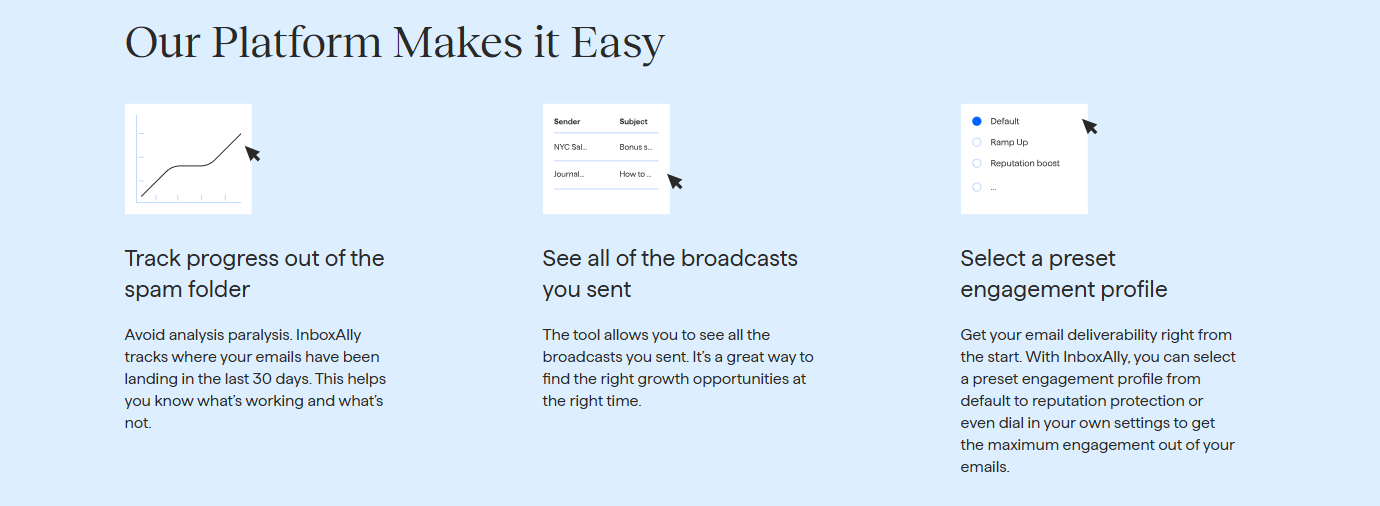
Besides the technical aspects like deliverability and domain reputation, your email itself could be the problem. In line with the inbox placement feature, InboxAlly also includes content-testing tools, which allow you to test your campaign content before sending.
This helps you assess whether mailbox providers are treating your content differently. Even when your sender reputation looks good, the problem could simply be related to the content itself, such as the subject line, number of links, text-to-image ratio, or overly promotional language.
Content testing is not about finding a perfect combination of words that will somehow ‘beat’ spam filters. Mailbox providers look at far more than the copy inside an individual message, and strong sender reputation and genuine subscriber engagement are still the main indicators.
Again, for high-volume senders, this kind of capability is crucial to your campaigns’ success, and if you’re still on the fence about whether you need the tool or not, here’s a list of who would benefit from any of the plans.
Who would benefit from InboxAlly?
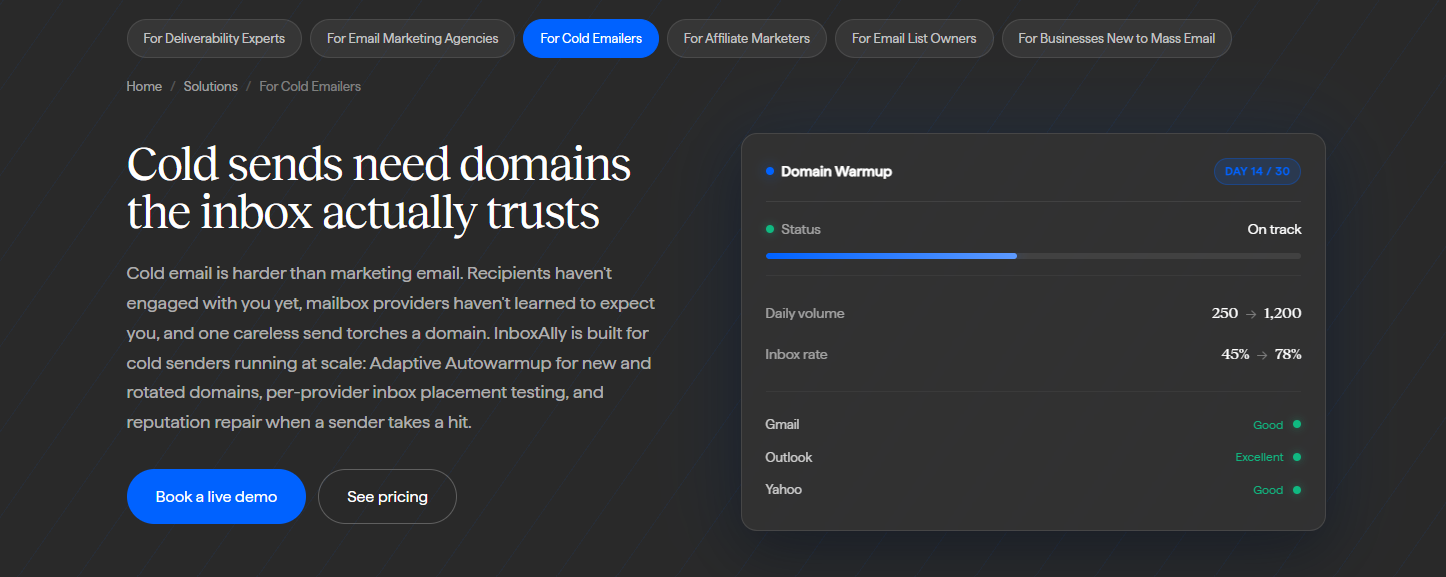
- Agencies
Managing email campaigns on behalf of clients? InboxAlly is definitely for you. If you need to explain results, then you’ll need the correct information behind your stats.
- High-volume senders
The more revenue or leads you generate from email, the easier it is to justify paying $149/month. Losing money from a well-performing channel and not knowing what the problem is, let alone how to fix it, could be detrimental to your top line.
- Brands with a damaged sender reputation
Ultimately, this is who InboxAlly is designed for. If you know you have a reputation problem, have already corrected things like authentication, list hygiene, targeting, and sending behavior, but are still struggling to recover placement, InboxAlly is solving a specific problem.
My verdict

I would consider InboxAlly if:
- email is an important revenue or acquisition channel
- you send at high volume
- you manage deliverability for clients
- your sender reputation has been damaged
- campaigns are consistently going to spam
- you have fixed the obvious issues, but placement is recovering slowly
- you need better visibility than your email service provider gives you
I would skip it if:
- you send low volumes
- you have no evidence of a deliverability problem
- you only need basic warm-up
- email does not generate enough value to justify the cost
- you are hoping software will compensate for a poor list or bad sending practices
The simplest test is to look at what poor deliverability is already costing you. If missed inbox placement is worth more than the monthly subscription, InboxAlly is much easier to justify. If it is not, you are probably better off fixing the fundamentals first and keeping the extra money in your budget.




 English
  German
  Spanish
  French