

- Right Side Up Agency Review: What I Learned After Looking Closely at Their Growth Model - March 23, 2026
- The Best MarketerHire Alternatives in 2026 - March 4, 2026
- Incrementality vs Attribution - February 25, 2026
Last Updated on February 18, 2026 by Sussan Porras
How modern growth teams are actually choosing partners, from someone who’s built, and scaled hundreds of funnels
I’ve been building and fixing sales and marketing systems for more than twenty years. I ran a consulting firm advising brands like Ford, Mazda, and 24 Hour Fitness, but what shaped my perspective far more than brand logos was sitting in rooms where revenue was either growing or not. I’ve worked with teams that were convinced their strategy was brilliant while the funnel quietly leaked at every stage. I’ve also worked with teams that had nothing flashy at all, but executed with discipline and scaled fast.
After auditing hundreds of campaigns and funnels, I can usually tell within fifteen minutes whether the problem is strategic or operational. Most of the time, it’s operational. The idea itself isn’t broken. The friction shows up in hiring someone who has never owned revenue to run paid media, in messaging that sounds clever but doesn’t convert, in a checkout flow that technically works but loses buyers along the way, or in a sales team that never calls back quickly enough. Those are the quiet killers of growth.
That’s why the conversation around the best digital performance marketing companies looks very different in 2026 than it did five years ago. The question is no longer which agency has the biggest name or the most polished deck. The real question is who can move revenue in an environment that shifts constantly.
The Agency Model Most of Us Grew Up With No Longer Fits
For years, hiring a marketing partner followed a predictable script. A company would sign a six- or twelve-month retainer, endure a lengthy onboarding process, review strategic frameworks, and then wait for traction. Sometimes that traction came. Often it was incremental and slower than expected, but the structure felt familiar enough that no one challenged it too hard.
That tolerance is disappearing.
Platforms evolve constantly. AI tools are reshaping creative production and content workflows at a pace most internal teams struggle to match. Privacy updates have complicated attribution models executives once trusted. At the same time, boards and founders expect clarity and measurable results faster than ever.
In that context, rigidity becomes expensive. I’ve watched companies spend months onboarding an agency only to realize the market shifted before campaigns were fully optimized. When priorities change mid-quarter, and they frequently do, a partner that cannot pivot quickly becomes a liability.
What I’m seeing across growth teams is a move away from bloated agency structures toward operator-led models that integrate directly into the business. Companies want partners who understand contribution margin, sales velocity, and payback periods, not just impressions and click-through rates.
Marketing is no longer isolated from finance and operations. CAC, LTV, retention curves, and pipeline quality are board-level conversations. Agencies that cannot connect performance activity to revenue math struggle to remain relevant in serious growth environments.
SEO Is No Longer the Center of Gravity

There was a time when most digital strategies began with SEO. Rank for high-volume keywords, capture traffic, and convert visitors. It was methodical and predictable.
AI-generated summaries are compressing click-through rates. Buyers increasingly get what they need from search previews or AI assistants without ever visiting a website. Organic traffic still matters, but it is no longer the singular growth engine it once was.
At the same time, paid acquisition has become deeply algorithm-driven. Media buying today is less about manual bid adjustments and more about feeding platforms strong creative assets, clean data signals, and optimized conversion flows.
Performance marketing has evolved from channel management to system orchestration. The firms that understand this shift are not just running ads or managing SEO. They are building coordinated growth engines that connect paid media, lifecycle marketing, content, first-party data, and sales alignment.
AI Has Lowered the Barrier and Raised the Standard
AI is everywhere in marketing now. It writes content drafts, generates ad variations, suggests audience segments, predicts performance trends, and analyzes campaign data. The cost of creating ten creative variations instead of two has collapsed.
When everyone has access to the same AI tools, advantage doesn’t come from using AI. It comes from how intelligently it’s applied. I’ve seen companies flood channels with AI-generated content assuming volume alone would drive performance. It rarely does. Without positioning clarity and disciplined testing, AI simply accelerates noise.
The best performance marketing companies in 2026 use AI to increase velocity without abandoning judgment. They produce creative iterations faster, test landing pages more aggressively, and analyze performance data more deeply. But they still anchor decisions in revenue math.
What Actually Matters When Choosing a Partner Today
After two decades inside growth engines, I evaluate marketing partners through a different lens than most procurement checklists suggest.
Brand recognition is secondary. Accountability is primary.
I want to know whether the people running campaigns have owned revenue before. I want to know if they have sat in meetings where CAC spiked and had to explain why. I want to know whether they understand how marketing connects to sales close rates and retention. Most importantly, I want to know whether they can adapt when numbers move in the wrong direction.
The best performance marketing companies today are defined by adaptability and operator experience. Growth is not linear. It is iterative and sometimes messy. It requires tight feedback loops and people who have already navigated scaling pressure.
Below are firms that consistently show up when execution matters.
The Best Digital Performance Marketing Companies in 2026
Right Side Up
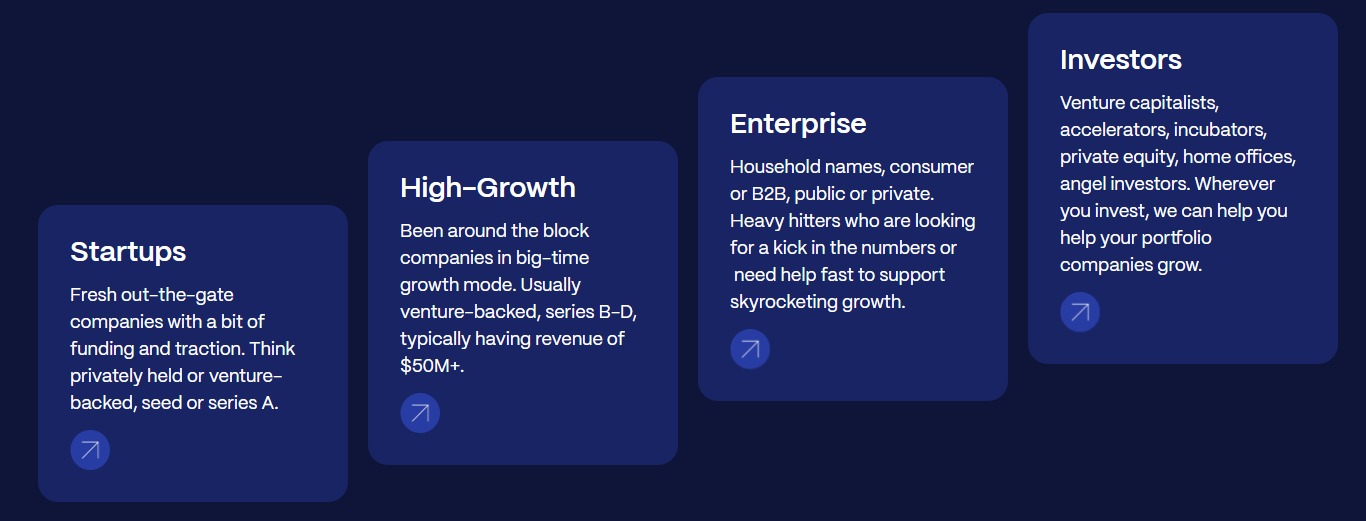
Right Side Up reflects where the model is heading. Rather than operating like a traditional agency, they function more like a network of seasoned growth operators.
There is a meaningful difference between someone who has managed campaigns and someone who has defended revenue forecasts in a boardroom.
Their strength lies in flexibility. Companies bring them in for fractional leadership, embedded execution support, or to stand up growth teams from scratch. The engagement adjusts to the business rather than forcing the business into a fixed scope. In fast-moving environments, that adaptability reduces friction and risk.
Tinuiti

Tinuiti sits at the enterprise end of the spectrum, particularly strong in ecommerce and retail media. Once budgets scale, complexity multiplies. Marketplace algorithms change. Margins compress. Attribution becomes more sophisticated.
In those environments, operational maturity matters. Tinuiti brings structure and depth that enterprise ecommerce brands often need.
Wpromote

Performance marketing separated from brand eventually plateaus. Short-term ROAS can look strong while long-term positioning erodes quietly in the background. Differentiation weakens and acquisition costs begin to climb.
Wpromote integrates brand, creative, and performance in a coordinated way. For companies that understand brand equity compounds over time, that alignment helps prevent erosion and stabilize growth.
GrowthHit
The most common growth mistake I see is assuming traffic is the primary constraint.
I have walked into meetings where the team insisted the solution was doubling ad spend, yet their checkout required six steps and buried shipping fees until the final page. No amount of traffic fixes structural friction.
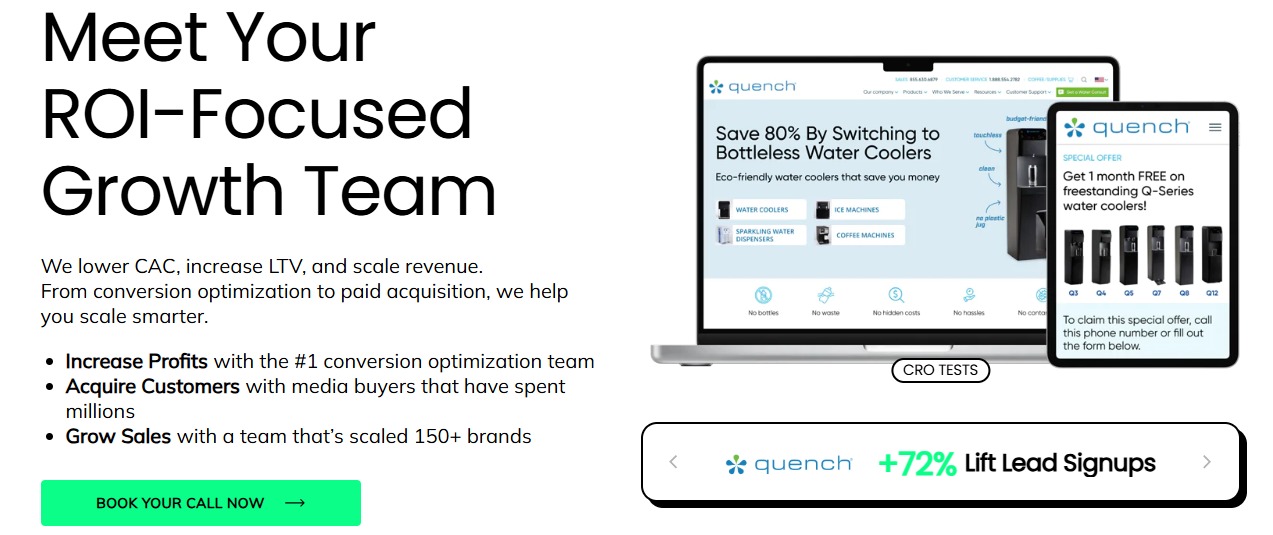
GrowthHit focuses on disciplined experimentation and conversion optimization. In a world where paid media costs continue to rise and SEO returns fluctuate, improving conversion efficiency is leverage.
KlientBoost
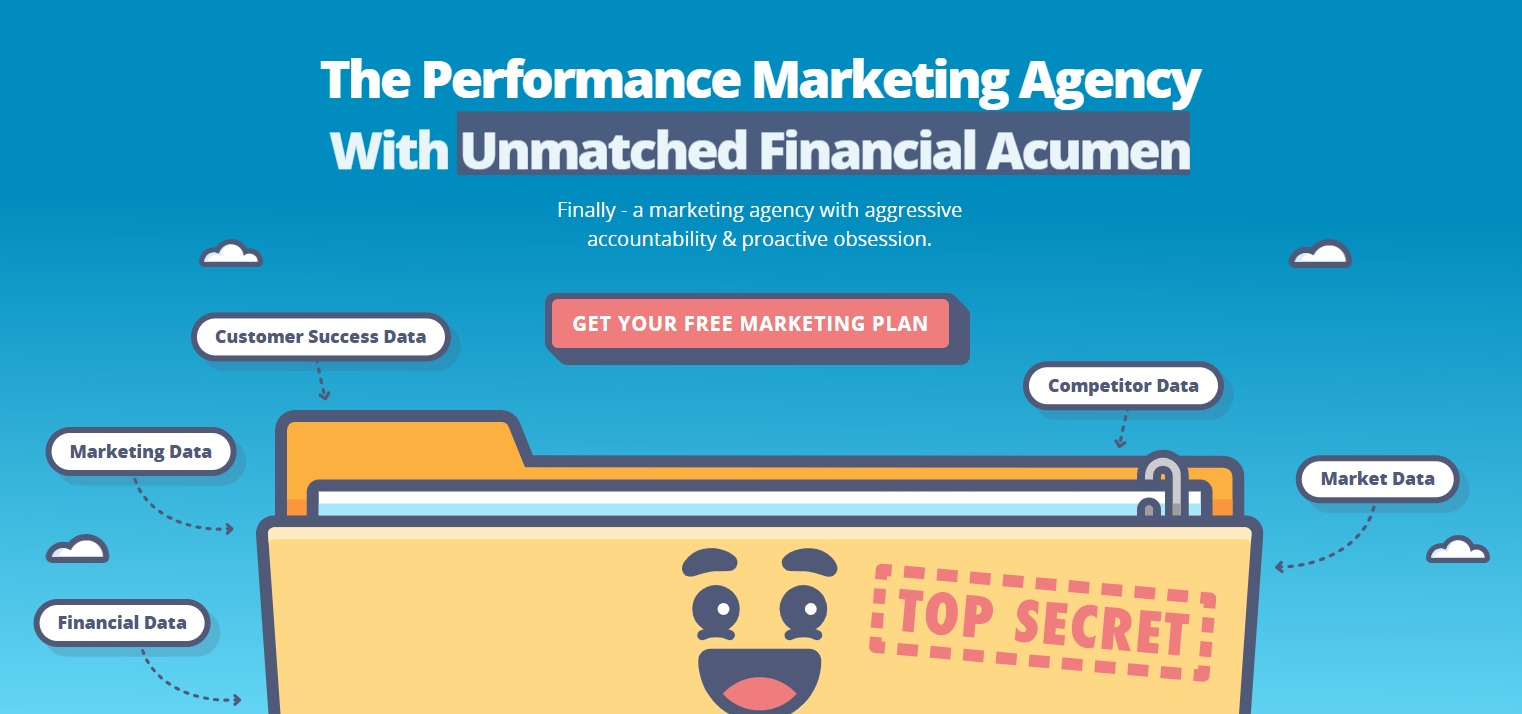
KlientBoost has built a reputation around speed and iteration. Their model is execution-heavy and metrics-driven. For SMBs and midmarket companies seeking momentum quickly, that approach fits. Sometimes decisive testing and refinement are the right first moves.
Single Grain
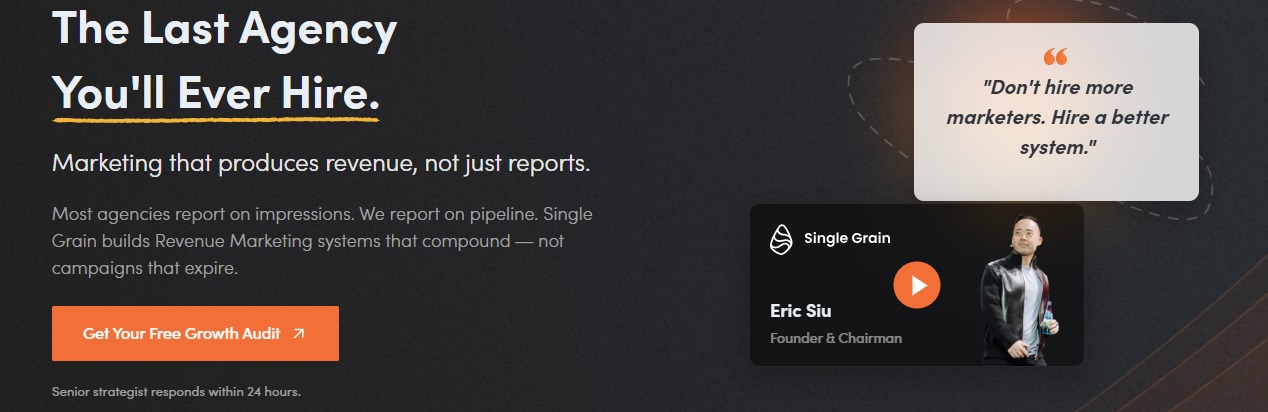
Single Grain blends paid acquisition with content and SEO. While SEO may no longer dominate the way it once did, owned demand still matters. Companies that invest in authority and educational depth reduce long-term dependency on paid channels.
Directive
Directive focuses on B2B SaaS and enterprise technology, where marketing must connect directly to pipeline and revenue. In longer sales cycles, attribution and alignment with sales become more important than surface-level metrics.
The Broader Shift I’m Seeing
The best performance marketing partners in 2026 understand that growth is a systems problem rather than a channel problem. Paid media, AI-driven creative production, lifecycle automation, first-party data strategy, and sales alignment must operate together.
I’m also seeing renewed emphasis on first-party data ownership. As tracking becomes less reliable across platforms, companies that build direct relationships with customers through email, community, and lifecycle marketing gain resilience.
Breakthroughs rarely come from dramatic reinvention. They come from disciplined execution. Clarifying an offer. Simplifying a funnel. Installing better follow-up systems. Aligning marketing cadence with sales cadence.
When I helped one client grow from six thousand dollars per month to one hundred forty thousand per month, it wasn’t because we found a secret platform. It was because we rebuilt the funnel carefully, aligned messaging with the actual customer, and tightened execution.
Growth rewards operators. It rewards teams that measure honestly, iterate quickly, and adjust without ego.
Choosing Wisely in 2026

If you are selecting a performance marketing partner this year, look beyond the pitch. Ask whether they have owned revenue. Ask how they adapt when metrics shift mid-quarter. Ask how they handle attribution ambiguity when dashboards don’t tell the full story. Ask how they integrate with your internal team rather than operating beside it.
There is a difference between leveraging AI as a tool and hiding behind it as a substitute for judgment. I am seeing a wave of “AI operators” who can generate content, spin up ads, and automate workflows quickly, but have never carried the weight of a revenue target. AI can accelerate output. It cannot replace experience. It cannot make strategic trade-offs when margins compress or when a sales team pushes back on lead quality. It cannot sit in a board meeting and explain why CAC increased or why retention dipped.
Be cautious of partners who lean too heavily on automation without demonstrating strategic depth. Speed without clarity creates noise. Volume without conviction creates waste.
What you want is a firm that uses AI intelligently but remains grounded in fundamentals. A team that listens carefully to your constraints. A partner willing to challenge assumptions. A group that understands that every company’s growth path is different and that real progress requires working through your specific economics, customer behavior, and operational realities, not applying a templated playbook.
Marketing will continue to evolve. AI will automate tasks. Platforms will change rules. Search behavior will transform. But disciplined execution, thoughtful strategy, and accountability to revenue remain constant.
The loudest partner rarely wins in the long run. The one who understands your economics, works through complexity with you, moves decisively when data demands it, and adapts when the ground shifts is the one who helps you scale.
In 2026, that is the difference that matters.



 English
  German
  Spanish
  French