

- How to Hire an AI Consultant: Where to Find Experts and What to Ask - October 14, 2026
- How to Replace a Marketing Agency Without Losing Momentum - October 10, 2026
- Before You Buy That Expensive Ecommerce Course, Read This - August 14, 2026
Last Updated on August 25, 2026 by Victor Carrera
Refersion has built a loyal user base among Shopify merchants and direct-to-consumer brands. It’s very affordable at the entry level and handles the basics of affiliate tracking without much friction, streamlining the process for brands launching affiliate programs.
But at a certain point, brands tend to bump into Refersion’s growth or scale tier pricing and its limited channel coverage. If that’s you, or if you’re just interested in understanding the broader affiliate marketing platform landscape, then you’re in the right place.
Let’s take a closer look at various Refersion alternatives available today, explain what each one is best suited for, and help you find the right tool for your needs.
At a Glance
| Primary channels supported | Relationship model | Tracking / attribution level | Pricing model & starting point | Best for | |
| Refersion | Shopify, Shopify Plus, BigCommerce, WooCommerce, Magento, Stripe | Self‑serve program management | First‑party, cookieless tracking | Low‑tier SaaS + % of affiliate revenue | Early‑stage D2C brands |
| Levanta | Amazon, Shopify, Walmart marketplaces and stores | Direct creator marketplace | ASIN / SKU‑level, marketplace attribution | Subscription + % of attributed sales | Omnichannel Amazon + storefront brands |
| Impact | Shopify, BigCommerce, WooCommerce, Adobe Commerce, Squarespace, custom | Mixed self‑serve + partner marketplace | Advanced multi‑touch attribution | Tiered SaaS + setup and transaction fees | Enterprise, multi‑channel programs |
| CJ Affiliate | Global web publishers in retail, fashion, travel, finance, tech | Network: brands list, publishers apply | Standard network affiliate tracking | Custom, performance-oriented pricing | Mature brands needing publisher reach |
| Awin | Global affiliate network across e-commerce verticals | Network with self‑serve setup | Standard tracking + API access | Lower‑entry SaaS + tracking fees | Small–mid brands entering performance |
| Partnerize | Multi‑vertical e-commerce and app programs, global | Direct partner relationships, managed | AI‑assisted optimization and fraud tools | Custom enterprise contracts | Large enterprises, complex programs |
| Rakuten | Global premium publishers across major retail sectors | Network with white‑glove management | Mature network tracking | Custom performance‑based pricing | Established brands, premium alignment |
Refersion: What You’re Coming From
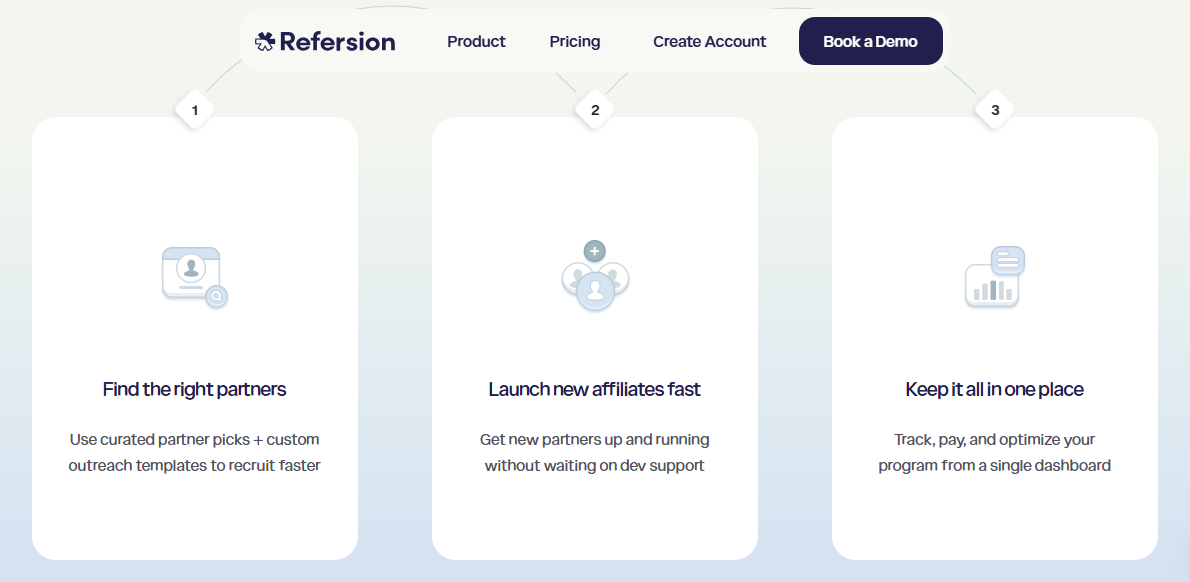
Refersion is a solid affiliate management platform for brands that operate primarily in the direct-to-consumer space. Its ease of use and features like first-party tracking without cookie dependency, clean affiliate management, and a straightforward onboarding experience make it a great option for launching a new program seamlessly. It also has a free Marketplace listing tier where brands can post commission offers and let affiliates find them.
The entry-level pricing is accessible for newer programs, with a Launch plan that runs $39/month plus a 3% fee on affiliate-driven revenue. The Growth tier at $199/month adds API access, advanced commission rules, multi-store management, and 30+ marketing integrations.
But while Refersion integrates directly with platforms like Shopify, Stripe, WooCommerce, BigCommerce, it isn’t built for other mainstream marketplaces like Amazon or Walmart, where you’d be flying somewhat blind when it comes to connecting affiliate traffic to actual sales. It’s also primarily a program management tool, meaning it doesn’t come with a curated creator network, ASIN-level performance data, or multi-marketplace operations.
With that perspective, let’s go over a few popular alternatives to Refersion and talk about which ones fill which gaps.
The Alternatives
Levanta: Best for Brands on Amazon, Shopify, and Walmart
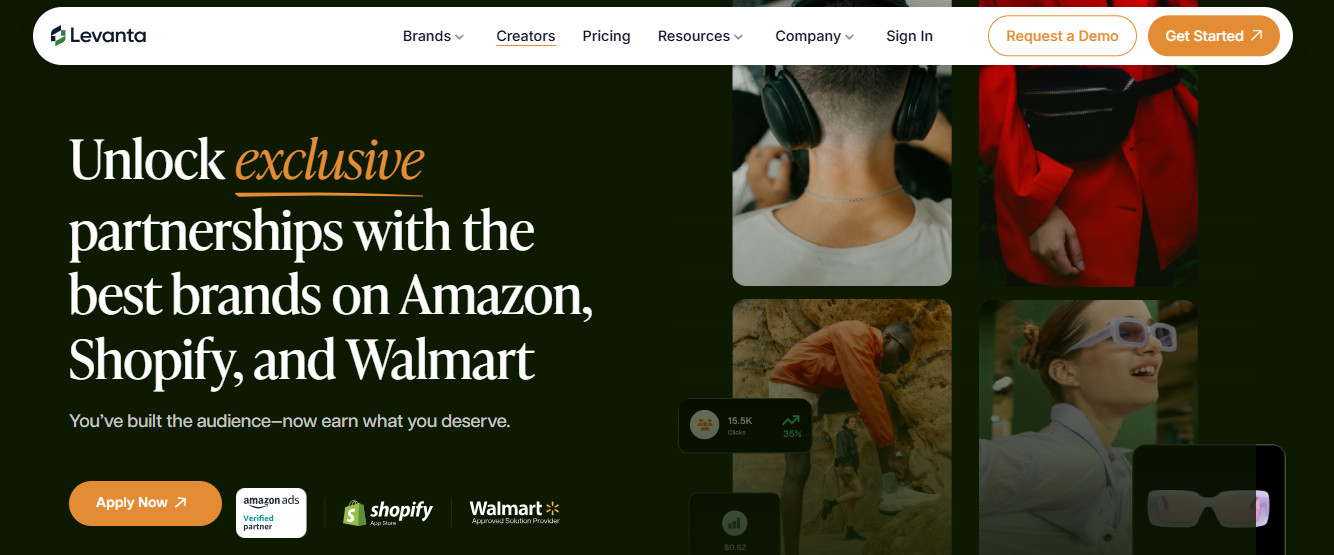
Levanta is built for brands that sell across Amazon, Shopify, and Walmart, and its edge comes from native integrations with all three. Where most affiliate platforms track clicks through generic link tools, Levanta connects directly to Amazon’s infrastructure for ASIN-level revenue attribution, supports Shopify storefronts, and extends into Walmart.
This gives omnichannel brands a unified view that general-purpose affiliate marketing platforms can’t replicate.
Its network includes 70,000+ vetted creators, spanning influencers, bloggers, publishers, and deal sites. Brands get a built-in Creator Marketplace with branded signup pages, outreach tools, and flexible commission structures. Levanta also supports the Amazon Brand Referral Bonus, which offers around a 10% kickback on referred sales.
The platform handles payments, 1099s, gifting, and a Creator Connections integration for managing Amazon Attribution and Creator Connections from one dashboard.
The downsides are the starting $750/month price of Levanta’s Gold Plan, annual contract commitment, and a 3.5% commission of affiliate sales revenue. Consequently, Levanta is best suited for brands with validated products and an existing revenue base. That being said, brands selling under $250k per month on Amazon may qualify for a separate plan.
Best for: Brands operating across Amazon, Shopify, and/or Walmart, and any omnichannel business looking to drive meaningful external traffic to marketplace listings.
Impact: Best for Enterprise and Multi-Channel Programs
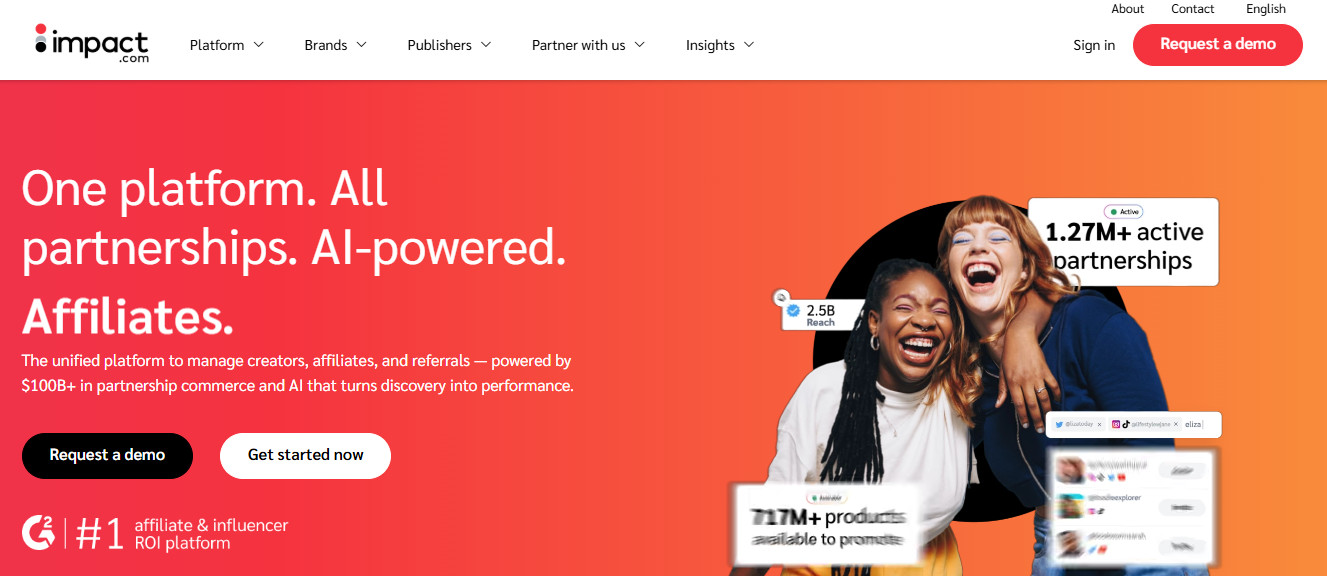
Impact is one of the most comprehensive partnership management platforms available, and for large organizations with dedicated affiliate program teams, it’s particularly powerful. The platform manages affiliates, influencers, B2B partners, and brand ambassadors under one roof with enterprise-grade reporting, multi-touch attribution, and deep workflow automation.
Its core strength is its flexibility. Brands can build custom commissioning rules, set tiered performance bonuses, automate partner onboarding, and access a Marketplace to recruit new partners. For global programs with complex structures, the reporting suite (including Data Lab and partner-level LTV analysis) gives marketing teams the data depth to optimize at scale.
The tradeoff is complexity and cost. Impact was built for Fortune 500-level operations, and despite efforts to serve smaller Shopify merchants through a Starter plan, the platform’s DNA remains enterprise-heavy. While Starter is $30/month (plus a 2.5% transaction fee) and Essentials is $500/month, the much more capable Pro plan is $2,500/month, and Enterprise is available for custom pricing. All plans require an e-commerce platform integration, and a one-time setup fee applies. Setup and onboarding require a meaningful time investment, and smaller teams without dedicated affiliate program managers can find the interface overwhelming.
Best for: Brands whose affiliate program is a core channel with dedicated staff and a budget to match.
CJ Affiliate: Best for Scale and Publisher Network Reach
CJ Affiliate is one of the longest-standing names in the affiliate industry, with over two decades of operation and a publisher network that spans more than a billion digital consumers across 240+ countries. If sheer publisher reach and brand recognition are priorities, CJ is hard to ignore.
Where CJ shines is in connecting advertisers with established, high-volume publishers, such as content sites, media outlets, loyalty platforms, and professional affiliate partners. Its reporting tools are comprehensive, and the network includes many of the largest retail brands on the web.
The friction points are pricing that’s not publicly listed, and the baggage of network access fees. It’s also relatively unintuitive and dated compared to modern alternatives. And for brands looking to work directly with individual creators, influencers, or Amazon-focused partners, CJ’s strengths don’t directly address that need.
CJ is also primarily a network model, which means you’re working within a shared publisher ecosystem rather than building a directly managed creator program. That structure suits brands looking to tap into existing publisher traffic, but less so for brands wanting to build curated influencer relationships from scratch.
Best for: Established brands with substantial affiliate budgets looking to access a large, global publisher network with performance-based payouts.
Awin: Best for Small-to-Mid-Sized Brands Entering Performance Marketing
Awin is a global network with over 30,000 advertisers and one million publishers, with an affordable Access plan that makes entry more achievable for smaller brands.
Strengths of the platform include its international reach (spanning 180+ countries) and its diverse publisher mix, which encompasses content creators, bloggers, and technology partners. Reporting is customizable, and the platform supports API-based automation for scaling programs over time. Major global brands, such as Etsy, HP, and Samsung, operate programs through Awin’s network.
However, Awin is primarily an inbound network where brands publish programs and publishers apply. For brands wanting to proactively recruit specific creator profiles or build relationship-driven influencer programs, the model requires more manual work. Reporting, while customizable, draws criticism from some users for being less granular than competing platforms.
As far as the pricing goes, Access starts at $49/month plus a 3.5% transaction tracking fee, Accelerate is $99/month plus a 2.5% tracking fee, and Advanced requires custom pricing for enterprises. With Access, you also get the first month free and a low-risk 3-month minimum term.
Best for: Small to mid-sized D2C brands looking for an affordable entry point into a large, global affiliate network, particularly those with international growth ambitions.
Partnerize: Best for Complex Enterprise Partnerships
Partnerize is an end-to-end enterprise partnership solution that covers affiliate, influencer, and B2B partner management, with an emphasis on data transparency, fraud prevention, and scalable automation. Industries like retail, travel, finance, and D2C are its primary target verticals.
The platform supports direct partner relationships, essentially bypassing the traditional network middleman. Additionally, Partnerize offers real-time performance tracking, multi-currency payment processing, and automated workflows, using AI for partner discovery, predictive optimization, fraud intelligence, and unified data and attribution. For large brands running sophisticated programs across multiple markets, the infrastructure is very robust.
However, there are some barriers to entry here. The setup process is quite involved, and the platform’s complexity comes with a learning curve that’s impossible to ignore. Furthermore, pricing is entirely custom and requires you to submit an inquiry form with a business email. Some estimates place starting costs at around $2,000/month.
Best for: Large enterprises and agencies managing multi-region, multi-currency affiliate and partnership programs with in-house operational capacity.
Rakuten Advertising: Best for Premium Brand Alignment
Rather than positioning itself on feature breadth or pricing accessibility, Rakuten’s strength is premium brand partnerships, white-glove management, and a publisher network curated for alignment with established brands.
Brands that succeed on Rakuten are typically those with existing traffic authority and recognizable names that attract high-quality publisher interest. The network includes household retailers and well-known global brands, and the account management team is frequently praised for responsiveness and strategic support.
The positioning is unapologetically premium, however, with pricing that’s entirely custom. Furthermore, the interface draws mixed usability feedback, and the net-60 schedule won’t work for every brand.
Best for: Established brands with proven market presence looking to align with premium publishers through a managed, relationship-driven affiliate network.
How to Choose: A Use Case Framework
If you’re still not sure which way to go, here’s how to choose based on what your business actually looks like:
- You’re an omnichannel brand operating across Amazon, Shopify, and Walmart. Levanta is built for exactly this use case.
- You’re a pure D2C brand on Shopify or a similar e-commerce platform. Refersion, Awin, or Impact are all reasonable starting points, depending on your budget and program complexity.
- You’re a large enterprise with a dedicated affiliate team and a complex partner mix. Impact or Partnerize are your best options with CJ as a supplementary network for publisher reach.
- You want global scale with a lower cost of entry. Awin’s Access plan is worth a look, particularly if international markets are in scope.
- You prioritize brand prestige and managed relationships over self-serve scale. Rakuten Advertising is the right fit.



 English
  German
  Spanish
  French