

- When it’s Time to Consider B2B SaaS Affiliate Program Management - November 11, 2026
- Are There True Multichannel Affiliate Marketing Tools? Depends on What You Need to Track - November 11, 2026
- How to Replace a Marketing Agency Without Losing Momentum - October 10, 2026
Last Updated on November 11, 2026 by Sussan Porras
As your brand and affiliate program grows, you may find yourself wondering if there’s a true multichannel affiliate marketing tool that can get all your data and programs into one place, one dashboard.
But when you start searching, you run into a problem: multichannel means different things to different people when it comes to affiliate marketing.
One refers to a multi-channel promotion tool, while the other is talking about marketplace attribution. And you definitely don’t want to buy one when you really need the other.
It can be difficult to compare apples to apples when companies are using the same term to mean different things, so let’s break it down.
| Multichannel for Sales (e.g., Levanta) | Multichannel for Promotion: Social (e.g., Influencer Hero) | Multichannel for Promotion: Enterprise (e.g., impact.com) | |
| Best For | Multi-channel e-commerce brands that sell on Shopify, Amazon, Walmart, TikTok Shop and Wayfair | E-commerce brands using creators and influencers across multiple social channels. | Enterprise brands with complex customer journeys. |
| Social Content Monitoring | Social post tracking is newer and less developed than social-first tools. | Automated. Scraping tools automatically capture posts across multiple channels. | Automated social monitoring and social listening tools. |
| Creator discovery and recruitment | Yes, AI-powered creator marketplace plus social discovery on TikTok, Instagram, and Facebook. | Yes, AI powered discovery and recruiting. | Automated recruiting. |
| Marketplace Support | Amazon, Walmart, and Wayfair, plus Shopify for DTC and TikTok Shop. | None | Amazon integrations. |
| Price Point & Contract | Growth-oriented mid-market pricing. | Accessible. | High enterprise fees. |
| Primary Limitation | Platform fee plus a cut of affiliate sales, which can add up for smaller brands. | No marketplace integration. Relies on users checking out on your own site. | Setup friction and heavy software overhead. |
Multiple meanings, one search term

“Multichannel” should mean “all channels,” right? But are you talking about sales channels or promotional channels? The term can be applied to either.
An multichannel affiliate marketing tool for sales lets you run one affiliate program that tracks purchases wherever your customers check out, whether that’s your own store (like Shopify) or a marketplace (like Amazon or Walmart). It credits the right affiliate or creator for each sale and shows all your results in one dashboard, so you’re not managing a separate program for every channel.
An multichannel affiliate marketing tool for promotional channels allows you to track and pay creators across the platforms they publish on, which could include different social media channels (Instagram, Facebook, TikTok, YouTube, etc.). Enterprise level programs might also include other partnership types including traditional publishers, coupon databases, loyalty programs, and other types of partnerships.
So the first question to ask yourself is which channels need to be included in your version of a multichannel tool: sales or promotion?
You might need a multichannel sales tool if…
- Your revenue comes from somewhere other than your own website or storefront.
- Your program needs to be able to see and track sales on Amazon,Walmart, Wayfair, or TikTok Shop
- You’re running different affiliate tools for different platforms currently.
- You pay creators through more than one system and you might send one creator more than one 1099.
- Creators are always asking you which link they ought to share.
- Your team has to duct-tape together reports by hand.
- You’re planning to add a new marketplace in the next year.
You might need a multichannel promotions tool if…
- You can’t tell if a creator’s sales came from their post on TikTok, their YouTube video, or their newsletter.
- Your creators are spread across lots of different social media channels.
- You currently pay creators a flat fee or send gifts, but can’t track sales directly.
- Coupon codes are your main attribution method.
You might need an enterprise-level multichannel program if…
- You have a global brand that needs to track affiliates across many different global markets.
- You have a high compliance brand, like in health and wellness, that needs a lot of oversight and legal protection.
- You need partner vetting and fraud detection at scale.
- You want to start including other types of promotions, like loyalty programs and traditional publishers.
These different types of programs cater to companies of different sizes and with different needs. Smaller and startup brands will typically start with an multichannel promotional tool for their affiliate marketing program, because most of the emphasis of that program is on the influencers. Mid-market and growth brands may move up to an multichannel sales tool when they expand distribution to include marketplaces like Walmart and Amazon. And global, enterprise-level brands will need the extra tools and support that come with enterprise-level multichannel programs.
Multichannel sales tools for affiliate marketing
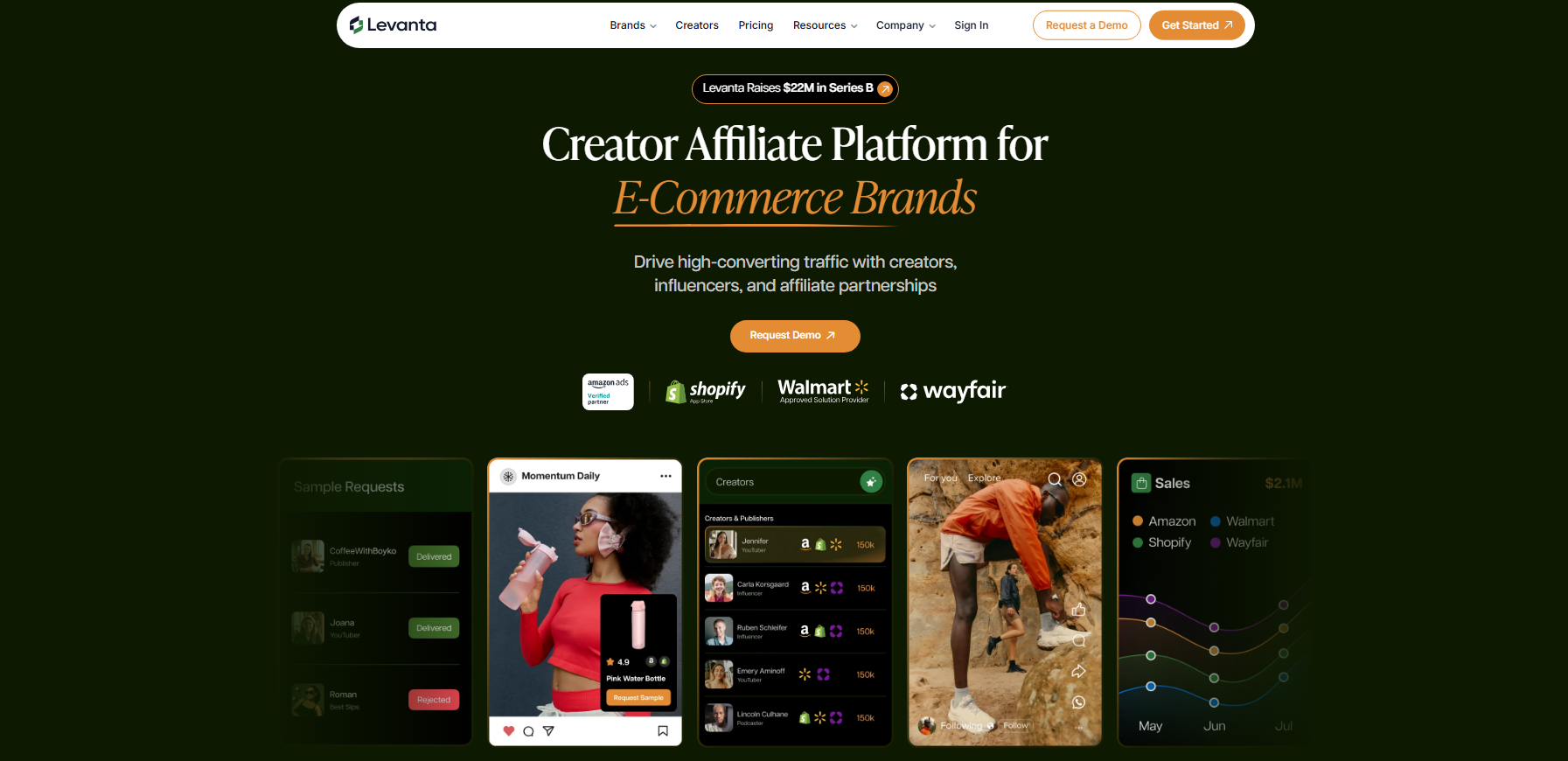
The main differentiator for multichannel sales tools will be which sites or marketplaces they integrate with to track sales. Most simpler affiliate tools only track sales on your own website. Tools that track across multiple marketplaces can be difficult to find and can have real limitations because Amazon and Walmart are walled gardens that limit what data they choose to share. But more programs are adding marketplace tracking, especially for Amazon.
There are two legitimate ways to run a “multichannel” program when it comes to affiliate sales: choosing a unified platform like Levanta if it fits your channel needs, or running a tool stack with a DTC-native network plus a marketplace-specific program. Which you choose depends on where your brand currently sells.
Ask the following questions when evaluating an multichannel affiliate marketing tool to track sales:
- Does it offer native attribution for the marketplace(s) you sell on (Amazon, Walmart, Wayfair or TikTok Shop)?
- Does it include your owned-store tracking (Shopify, etc.)?
- Does it have one creator roster and recruitment flow regardless of where the creator sells?
- Does it offer unified commissions, payouts, and 1099s?
- Does it offer product-level reporting (ASIN or SKUs)?
- Does it integrate marketplace-level bonuses?
The two top contenders for true multichannel affiliate sales tools are Levanta and Partnerboost. Both work with Amazon, Walmart, TikTok Shop and DTC sites. Levanta is a great choice if you sell on Shopify plus marketplaces, since it has a Shopify app alongside its Amazon and Walmart connections, and it just added Wayfair and TikTok Shop. PartnerBoost might be a better choice if you’re a smaller brand watching costs, since it charges a flat yearly fee instead of taking a cut of your affiliate sales.
If neither of these fits your needs, you’ll be forced to run a tool stack with your DTC-native tool plus a marketplace-specific program, and while that’s perhaps not ideal, it’s not a deal breaker, either.
Multichannel promotional tools for affiliate marketing
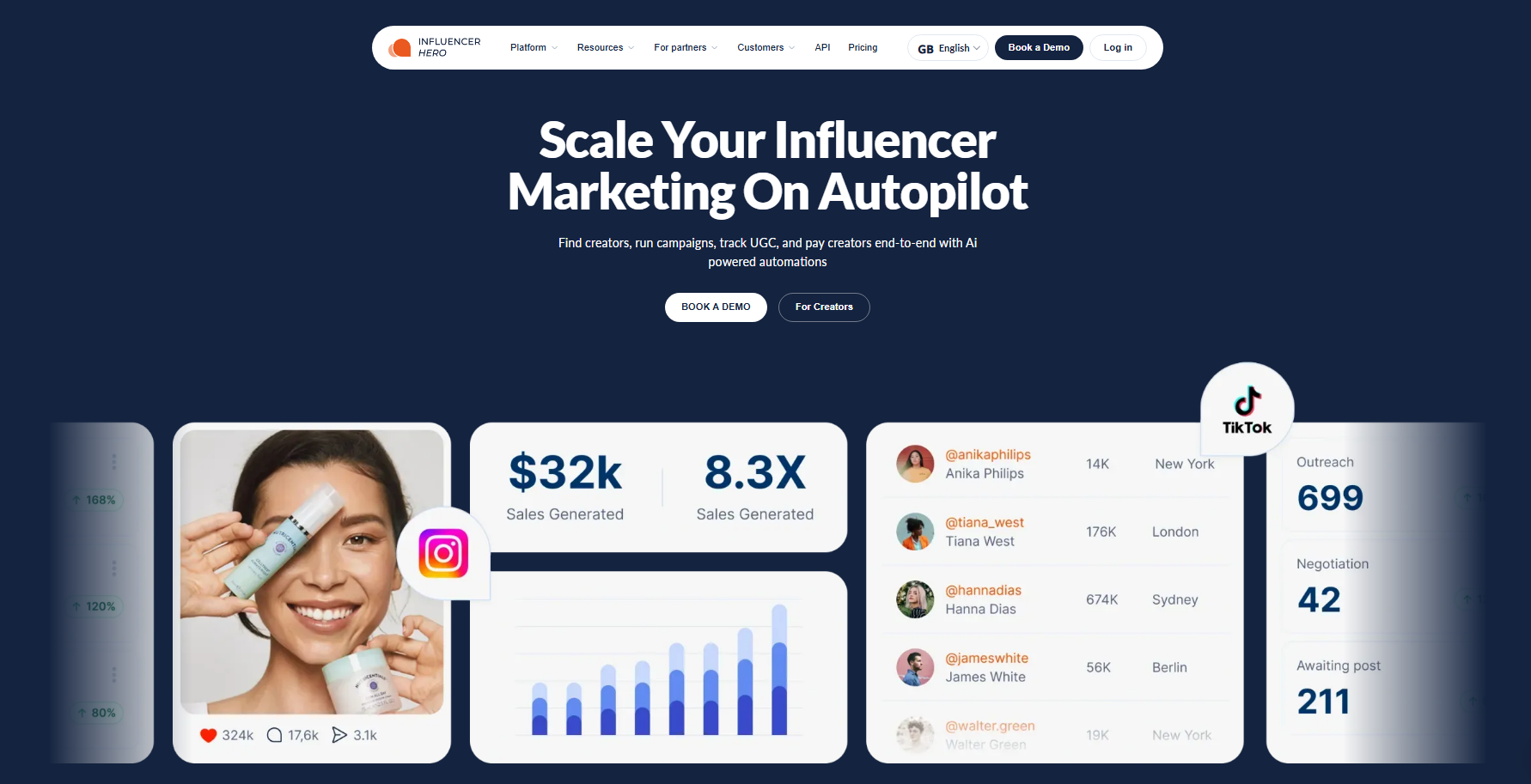
Multichannel promotional tools are for when you need to track your affiliate program across multiple promotional platforms, like multiple social media channels or multiple types of promotions.
These usually include the ability to track clicks across multiple platforms for a single creator, content and post attribution, and the important affiliate stuff like coupon and link management and payouts in a single dashboard.
There are two main categories of multichannel promotional tools:
- Social: tools that focus on social media cross-platform tracking
- Enterprise: tools that manage many partner types, not just creators, with enterprise-level support
Ask yourself the following when evaluating a multichannel promotional tool for your affiliate program:
- What partner types are supported? Creators, publishers, content sites, coupons, loyalty partners, etc.
- What tracking methods does it use: links and codes or an API?
- What commission and payment models does it support? For example, gifting vs. commissions.
- Does it offer creator discovery networks? And how large are its networks?
- Can it tie a specific post to a sale?
- Does it offer outreach and relationship management?
- Does it offer account management or managed services?
Beyond partner types, the biggest differentiator between these two categories is the size of the company that uses them.
If you’re a smaller brand, you’ll want to go with a program that fits your size (and budget) like Influencer Hero or Shopify Collabs. These do not integrate with Amazon or Walmart directly.
If you’re a global brand, you’ll want to go with one of the big guys like CJ or Impact that cater specifically to enterprise-level needs. They do integrate with Amazon, but their programs are probably too heavy and expensive for smaller brands.
What if you need both?
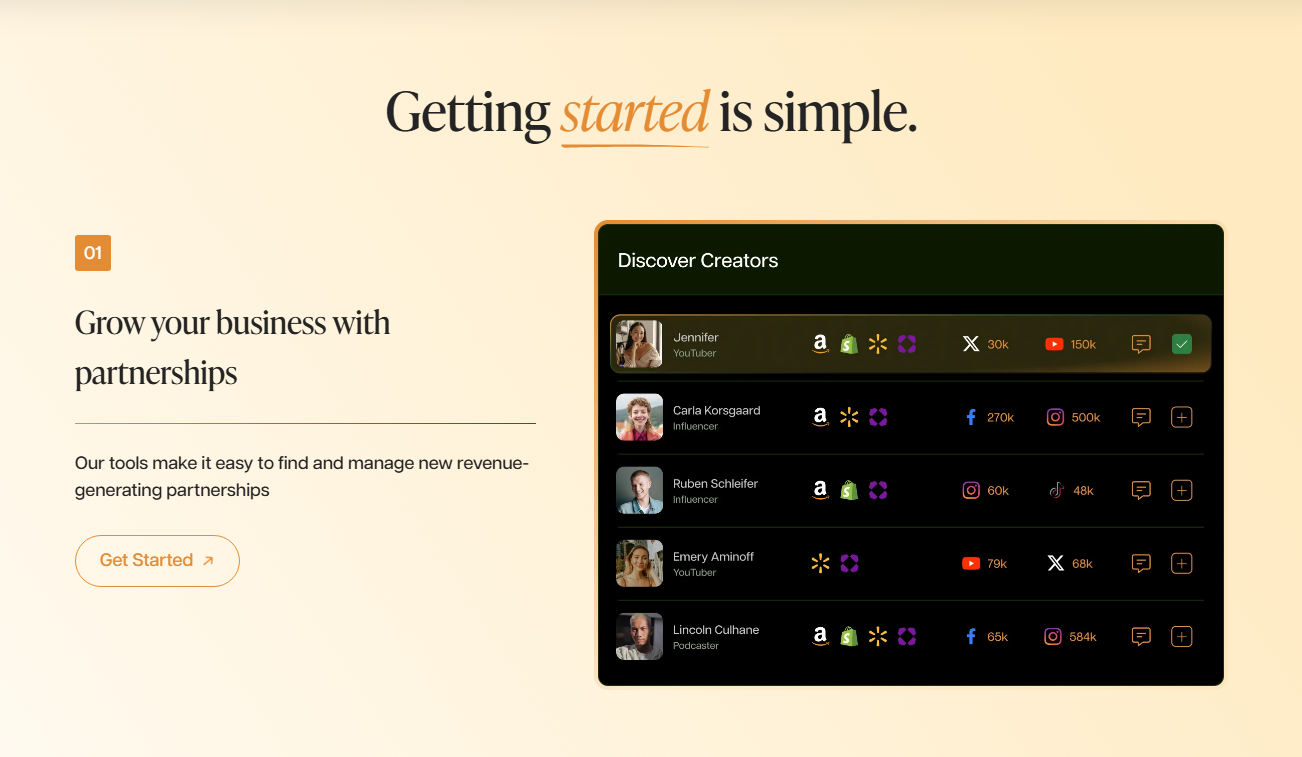
If you need both multi-channel promotional programs and omnichannel sales integrations, the enterprise options are probably the best bet if you can afford them, with Levanta coming in second for mid-market brands (its social media tracking tools are less developed than some of the bigger programs).
For now, ask yourself which is most important:
- If you need marketplace integration, especially Amazon and Walmart, go with a multichannel for sales that includes the marketplaces you sell on.
- If you need to be able to track which post from a creator resulted in a sale, go with a social media omnichannel tool that can track a single influencer across channels.
- And if you need global integrations, compliance support, and done-for-you services go with an enterprise level omnichannel tool.
Your decision about which omnichannel affiliate marketing tool is right for you will depend on your brand’s size, goals, and specific needs. But hopefully now you’ll understand the difference when some very different tools come up in your research.



 English
 German
 Spanish
 French